Ask a Tel Avivian for the city's defining sandwich and many will skip falafel entirely and name sabich: a pita packed with fried eggplant, hard-boiled egg, creamy hummus, chopped Israeli salad, tahini, and a sharp, sour mango sauce called amba. It is messy, layered, and quietly profound, the kind of street food that tells a whole story of migration in a single bite. That story runs straight through Tel Aviv's Iraqi-Jewish community, and there is no better place to taste it than in the working-class kitchens and market stalls where the dish first took root.
This guide traces sabich from Baghdad to the city's street corners, explains the wider world of Iraqi-Jewish cooking, and points you toward the Hatikva Market neighborhood, where this cuisine is still very much alive. If you want the broader food picture first, our overview of what to eat in Tel Aviv sets the table.
Where sabich comes from
Sabich arrived in Israel with Iraqi Jews who emigrated in large numbers in the early 1950s. The dish echoes a traditional Iraqi-Jewish Shabbat morning breakfast: fried eggplant, eggs that had slow-cooked overnight, and bread, all eaten together after synagogue. Because cooking is restricted on Shabbat, the components were prepared in advance, which is exactly why a cold-friendly, make-ahead spread translated so neatly into a portable sandwich.
Once in Israel, that breakfast was reimagined as fast food. Vendors tucked the familiar elements into a pita, added hummus, tahini, fresh salad, and amba, and sold it to hungry workers and commuters. By the late twentieth century sabich had jumped from a community dish to a citywide staple, beloved precisely because it felt homemade rather than mass-produced. The name itself is widely understood as a nod to that morning meal, and many longtime stands still treat the eggplant and egg as sacred, non-negotiable cores of the recipe.
What makes a great sabich
A proper sabich is about balance. The eggplant should be fried until deeply soft and almost silky, never greasy. The egg adds richness, the hummus and tahini bring creaminess, and the Israeli salad of finely diced tomato and cucumber cuts through with freshness. The make-or-break ingredient is amba, the fermented green-mango condiment seasoned with fenugreek and turmeric. Pungent, tangy, and a little funky, amba is what separates a sabich from an ordinary veggie pita. Order it "with everything" and eat it standing up, leaning forward so the drips land on the pavement and not your shirt.
The wider Iraqi-Jewish table
Sabich is the gateway, but Iraqi-Jewish cuisine runs far deeper. Look for kubbeh, dumplings of bulgur or semolina stuffed with spiced meat and dropped into tart, jewel-colored soups, beet-red kubbeh hamusta or golden kubbeh selek among the most cherished. Seek out sabzi-style herb stews, slow-cooked tbit (the Iraqi-Jewish answer to a Shabbat chicken-and-rice pot), fragrant rice studded with spices, and amba spooned over almost anything. It is a cuisine built on patience, sour notes, and generous spicing, and it rewards anyone willing to wander past the tourist core to find it.
Where to taste it: the Hatikva Market
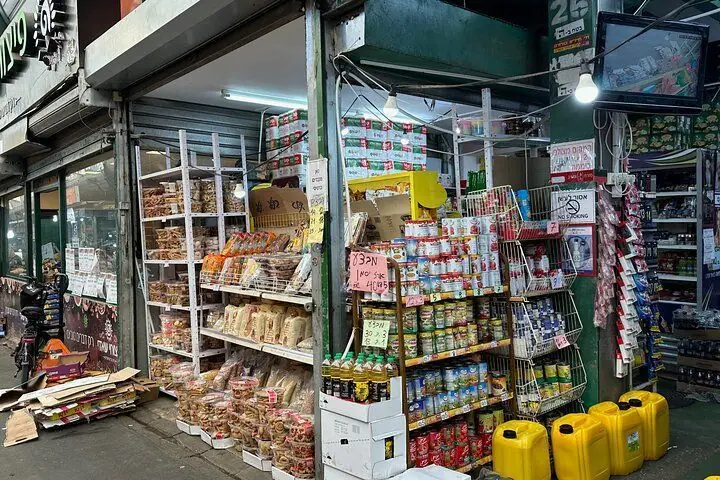
The spiritual home of this food in Tel Aviv is the Hatikva Market, a tight, unpolished warren of stalls in the city's south that locals prize for being the opposite of a tourist trap. Here Iraqi and Yemenite Jewish cooking still dominates, the prices are honest, and the vendors are more interested in feeding regulars than posing for photos. It is the place to eat sabich where it makes the most sense, surrounded by the community that brought it. To understand how Hatikva differs from the city's busier central market, read Hatikva Market vs Shuk HaCarmel before you go.
Because the market is compact, slightly out of the way, and best understood with context, this is one corner of Tel Aviv where a local guide genuinely earns their keep. The Hatikva Iraqi-Jewish Market food tour walks you through a curated lineup of tastings, sabich included, with the backstory behind each dish, while the more relaxed Hatikva Market: Sights & Tastes of the Middle East pairs the food with the feel of the neighborhood. Traveling as a couple, family, or small group and want a flexible route? The Hatikva Market private food tour gives you a dedicated guide built around your appetite.
How to plan your visit
Like most of Tel Aviv's markets, Hatikva follows the rhythm of the Jewish week. It is liveliest Sunday through Friday, with mornings to early afternoon the best window, and it quiets down for Shabbat from Friday afternoon through Saturday. If you are juggling a tight schedule, our notes on Shabbat in Tel Aviv and how to get around Tel Aviv will help you time things so you arrive while the stalls are open and the kitchens are firing.
Hungry for more than one market? Pair Hatikva with the larger, more central Shuk HaCarmel, where you can also find sabich and halva, covered in our Shuk HaCarmel food guide. If you are taking a day trip to Jerusalem, the covered lanes of Mahane Yehuda offer yet another feast on the Jerusalem Mahane Yehuda food tour. Wherever you start, sabich is the bite that turns most first-timers into believers, one dripping, amba-streaked pita at a time.
Make it the heart of your food day
Sabich is best understood as the opening chapter of a longer culinary day in Tel Aviv. Build a morning around the Hatikva Market, let a guide handle the introductions, then spend the afternoon walking it off along the coast or through the old city of Jaffa. For the full lay of the land, our roundup of the best things to do in Tel Aviv helps you slot a food crawl into the bigger trip without missing the beaches, the Bauhaus streets, or the sea breeze that makes this city so easy to love.
Frequently asked questions
What is sabich?+
Where does sabich come from?+
What is amba and why does it matter?+
Where can I eat Iraqi-Jewish food in Tel Aviv?+
Is the Hatikva Market open on Shabbat?+
Besides sabich, what Iraqi-Jewish dishes should I try?+
Book These Tours
Explore Tel Aviv with a local guide
Market food tours at Shuk HaCarmel and Hatikva, Tel Aviv & Jaffa walks, beach rentals, and Jerusalem day trips — book online with instant confirmation.
Browse all Tel Aviv & Jerusalem tours →