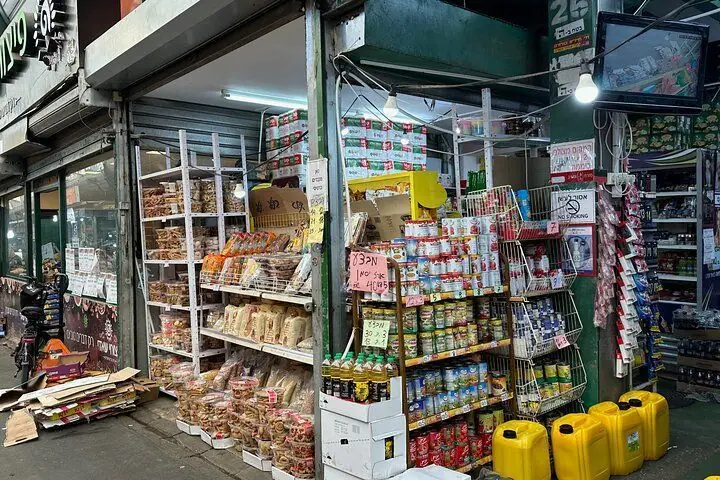
Shuk HaCarmel is Tel Aviv's largest and liveliest market, a sun-baked corridor of stalls running from the corner of Allenby Street down toward the sea. Locals simply call it "the shuk," and for a first-time visitor it is the single best place to taste the city in an afternoon. Pyramids of spices, dripping wedges of halva, trays of fresh-baked rugelach, and vendors shouting the day's prices all crowd together in a few noisy, fragrant blocks. This guide walks you through what to eat, when to go, and how to make the most of a stomach you only get to fill once a day.
If you want the full neighborhood picture beyond the food, our Shuk HaCarmel neighborhood guide covers the surrounding streets, the nearby Nachalat Binyamin craft fair, and how the area connects to the rest of central Tel Aviv. Use this article as your edible checklist and that one as your map.
Start with hummus, the city's true staple
No food crawl through Tel Aviv begins anywhere but a bowl of hummus. The Israeli version is smooth, warm, and generous, served with a pool of olive oil, a dusting of paprika, and soft pita on the side. Order it plain, topped with whole chickpeas (masabacha), or loaded with ful (stewed fava beans) for a heartier plate. Eat it the local way: tear the pita, scoop from the edge inward, and don't be shy about wiping the bowl clean. A side of raw onion, pickles, and a hard-boiled egg usually comes with it, and a cup of strong tea makes the perfect chaser.
Sabich: the sandwich Tel Aviv runs on
Sabich is the market's most beloved handheld meal, a pita stuffed with fried eggplant, hard-boiled egg, hummus, Israeli salad, tahini, and a tangy mango sauce called amba. Brought to Israel by Iraqi Jewish immigrants, it's filling, messy, and endlessly satisfying. Ask for it "with everything" and eat it standing up like everyone around you. If sabich captures your imagination, our deep dive on sabich and Iraqi Jewish food in Tel Aviv traces the dish from Baghdad kitchens to the city's street corners.
Halva, rugelach, and the sweet stalls
Halva is the showstopper of Shuk HaCarmel: dense, crumbly blocks of sesame paste studded with pistachio, chocolate, coffee, or vanilla. Vendors carve off samples freely, so taste before you commit, then buy a wedge to take home. Just as iconic are the warm chocolate rugelach, sticky little spirals of yeasted dough that locals buy by the bagful. Round out your sugar run with dried fruit, candied nuts, and Medjool dates the size of your thumb. These keep well, making them the best edible souvenirs you can pack.
Fresh juice, produce, and the savory extras
Cut through the sweetness with a cup of fresh pomegranate or orange juice, pressed to order at stalls dotted along the main lane. In season, pomegranate is tart, ruby-red, and worth every shekel. Beyond the juice carts, the shuk is stacked with seasonal produce, olives in a dozen brines, fresh cheeses, bourekas (flaky stuffed pastries), and falafel fried hot in front of you. Grazing across several stalls beats a single sit-down meal: order small, share with whoever you're traveling with, and keep moving.
When to go: hours and Shabbat closures
Timing matters in Tel Aviv. Shuk HaCarmel buzzes Sunday through Friday, with mornings to early afternoon the freshest and most energetic window. The crucial thing for first-time visitors to know is Shabbat: most of the market winds down by mid-afternoon Friday and stays closed Saturday, reopening Sunday. Plan your visit for a weekday morning if you want the full experience with every stall open. For the wider rhythm of the city's weekend, read Shabbat in Tel Aviv: what to know before you build your itinerary, and check the best time to visit Tel Aviv for seasonal produce highs.
Eat smarter with a guided food tour
The shuk rewards the curious, but a local guide unlocks the stalls you'd never find alone, the vendors worth your money, and the stories behind each dish. Our Market Food Tasting Tour at Shuk HaCarmel walks you through a curated lineup of tastings so you skip the tourist traps and eat like a regular. Prefer to set your own pace or travel as a couple, family, or small group? The Shuk HaCarmel private food tour gives you a dedicated guide and a flexible route built around your appetite. If you're weighing the formats, our take on private versus group tours in Tel Aviv helps you choose.
Beyond Carmel: more markets to taste
Once you've conquered Carmel, Tel Aviv's market scene keeps going. The grittier, less touristy Hatikva Market is a stronghold of Iraqi and Yemenite Jewish cooking; compare the two in Hatikva Market vs Shuk HaCarmel, or taste it firsthand on the Hatikva Iraqi Jewish Market food tour. Heading to Jerusalem on a day trip? The covered lanes of Mahane Yehuda are a feast in their own right, covered in our Mahane Yehuda market guide. However far you wander, Shuk HaCarmel is where most first-timers fall for Tel Aviv, one bite at a time.
Frequently asked questions
What should I eat at Shuk HaCarmel?+
Is Shuk HaCarmel open on Shabbat?+
What days and times is Shuk HaCarmel busiest?+
Is a guided food tour of Shuk HaCarmel worth it?+
Where is Shuk HaCarmel located?+
How does Shuk HaCarmel compare to Hatikva Market?+
Book These Tours
Explore Tel Aviv with a local guide
Market food tours at Shuk HaCarmel and Hatikva, Tel Aviv & Jaffa walks, beach rentals, and Jerusalem day trips — book online with instant confirmation.
Browse all Tel Aviv & Jerusalem tours →